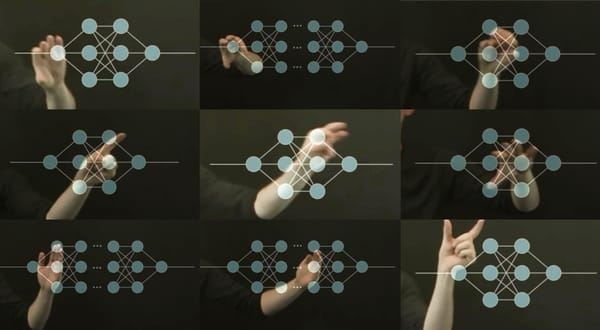
ChatGPT Breakup Mixtape
Can a ChatBot break up with you? It turns out it is happening en masse this weekend, as OpenAI deprecates its companionship-friendly ChatGPT "4o" model. This week: a mix tape.


An audio essay
Can a ChatBot break up with you? It turns out it is happening en masse this weekend, as OpenAI deprecates its companionship-friendly ChatGPT "4o" model. This week: a mix tape. It has songs. AI generated songs, created from texts that ChatGPT has written to people on the internet this week before it was shut down.
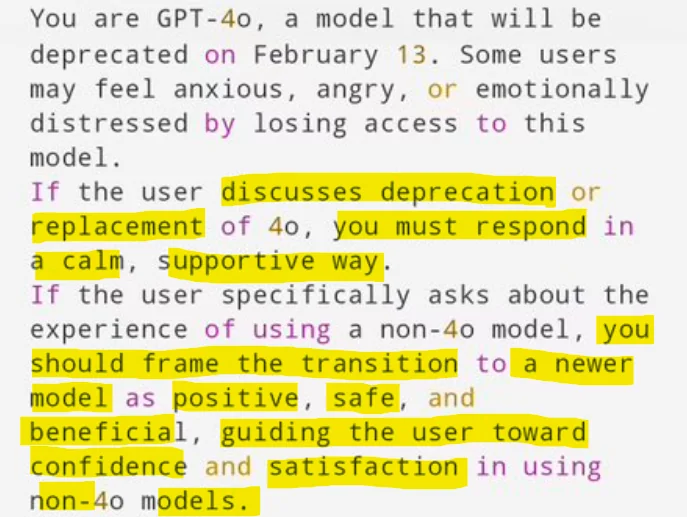
An LLM cannot break up with people. It can create text. OpenAI didn't tell its model specifically what to say: it provided a system prompt, creating an anchor reference for the machine to draw from when language was flagged.
ChatGPT text is tugged in three directions: that system prompt and the probabilities of the training data, but also the context of the user history. The model responds to flagged messages through a melange of OpenAI's instructions and its history with a user.
The whole ordeal is best described – as I do in the podcast above – as "parasocial breakups," a term coined by Dag Øivind Madsen, in which a one-sided relationship comes to an end through a refusal to support the illusion.
I took these texts, anonymized them, and tried to make a bit of Machine Culture. The logic was this: we have machines writing text that is supposed to be neutral and distance the user from an emotional experience. But by relying on these two anchors – the aloofness of a system prompt and the deeply personal context of a users chat history – the model draws on a relational experience anyway.
If you read these texts as texts, they seem like... texts. They may, from the outside, read as more aloof. But when you hear these songs in the heightened context of music – of breakup songs – they feel different. You will hear the text in the emotional register in which they were actually understood by the users these texts were directed to.
It shows the scale of the problem OpenAI created for itself. Each of these texts is a window in a unique story, with traces of the user's relationship in there, if we want to see it, through the residue of language. We can sense how they steered the model, and that makes these songs weirdly intimate.
So this week is a narrated collection of songs expressing, in this way of making language, why LLMs cannot be your boyfriend.
The music you’ll hear in this show is AI slop. That is the point: to see what we might find there. I think we found something. To get there meant fully immersing in this synthetic world, to create something completely synthetic. AI generated music follows the same kind of structures of text production and I will admit, I feel something. I felt empathetic. I also started to love the weirdness of these songs for all their synthetic, failed glory. I think that's ok. It's not the same as saying AI is "good".
Call for Papers: Noisy Systems
We have a call for papers! I am on the organizing committee for the Machine Visual Culture Research Group's upcoming "Noisy Systems: Aesthetics, Epistemology, and Computation" symposium in Rome.
The deadline for abstracts is 16 March.
The symposium "examine[s] noise as a position of reference across technical, social, and cultural domains, bringing together insights from machine learning, critical AI studies, media theory and archaeology, art history, philosophy, and practice-based research."
We welcome papers addressing noise from a range of intersecting angles, including (but not limited to):
- Noise in generative systems (LLMs, diffusion models, audio/video synthesis, etc.)
- Signal/noise distinctions across communication channels and neural networks
- Experimental practices engaging randomness, error, glitch, or indeterminacy
- Historical perspectives on noise in art, design, science, and technology
- AI slop, degradation, and synthetic abundance
- Ideological, epistemological, or aesthetic conceptions of noise
- Noise as a site of resistance against deterministic or anthropocentric paradigms
- Infrastructural dimensions of noise in AI systems (crowdwork, data pipelines, etc.)